
George Harland Taylor: On the morning of 16 December 1914, the war came to the English coast.
German battlecruisers shelled Scarborough, Whitby, and Hartlepool, striking towns with no effective coastal defences. For many civilians, it was their first direct encounter with modern warfare.
Among the dead was George Harland Taylor, a fifteen-year-old schoolboy and active member of the Boy Scouts. He was killed by shell splinters on Albion Street, becoming the only Boy Scout known to have been killed in action on British soil during the First World War .
This is his story, told as accurately as the surviving record allows.
A Scarborough Boy
George Harland Taylor was born in 1899/1900, the son of John Taylor, an innkeeper, and Harriet Taylor (née Harland). The family lived at 45 North Street, Scarborough. George was a schoolboy, described in contemporary reports as keen, responsible, and deeply involved in local Scouting activities.
In the weeks before the bombardment, George had been mentioned in the local newspaper for receiving a Scouting honour. On the morning of 16 December, he left home intending to buy a copy of the paper to show his friends. That ordinary errand placed him directly in the path of an extraordinary event .
The Bombardment of 16 December 1914
Shortly after 8 a.m., German battlecruisers opened fire on Scarborough. Over 500 high-explosive shells were fired in approximately thirty minutes, striking homes, hotels, churches, shops, and streets across the town. Civilians were hit without warning as they dressed for work, ate breakfast, or slept.
Seventeen residents were killed outright in Scarborough, with two more later dying from their injuries. More than eighty were seriously wounded. Children, women, and the elderly were among the casualties. Scarborough was an undefended town, and the attack caused widespread outrage across Britain .
George’s Death
George was on Albion Street when he was struck by shrapnel from a shell explosion. He was badly wounded and carried into a nearby house. He died there before medical help could reach him .
Contemporary accounts record that George was the last person hit during the shelling. His death occurred not at a military site or installation, but on a civilian street during an errand typical of any fifteen-year-old boy.
The Funerals and the Town’s Response
The funerals that followed the bombardment were attended by large crowds. According to the Scarborough Mercury of 24 December 1914, Boy Scouts lined the entrance to the cemetery as victims were laid to rest. George Harland Taylor was buried alongside neighbours, workers, parents, and children who had all been killed within minutes of one another .
The attack left a deep mark on the town. Streets across Scarborough suffered damage; houses were destroyed or rendered uninhabitable; businesses were ruined. Memorials would later be raised to remember the victims, including George, whose name appears consistently in official casualty lists and commemorations .
Why George Harland Taylor Matters
Thousands of Boy Scouts served during the First World War. Many older scouts enlisted and were killed overseas. Others, including younger boys, carried out home-front duties such as coastal observation, message carrying, and civil defence support.
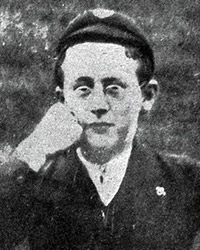
George Harland Taylor stands apart because his death occurred on British soil, during a direct enemy attack, while he was still a schoolboy. There is no record of any other Boy Scout being killed under comparable circumstances in Britain during the war.
His death is a reminder that the Great War did not remain distant for long. Long before air raids became familiar in the Second World War, civilians on the east coast experienced bombardment, fear, and sudden loss. George’s life and death sit at the point where childhood met industrial warfare.
Remembering George Today
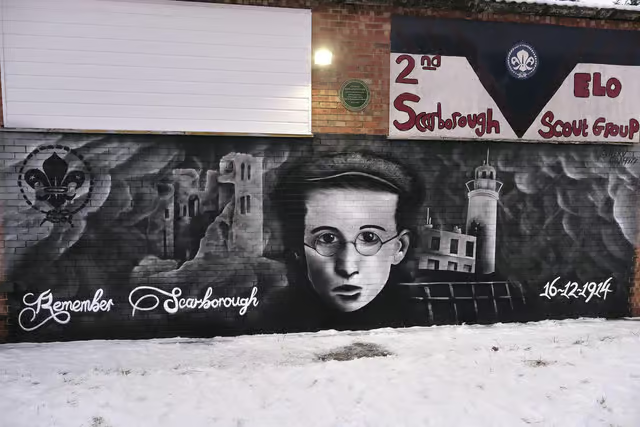
More than a century later, George Harland Taylor is remembered in Scarborough through plaques and memorials, including a Scout memorial unveiled to mark his death. His name is also preserved in contemporary publications documenting the East Coast raids, where he is listed among the civilian dead of 16 December 1914 .
He was not a symbol at the time. He was a boy going to buy a newspaper.
Looking Ahead: When War Came to Town
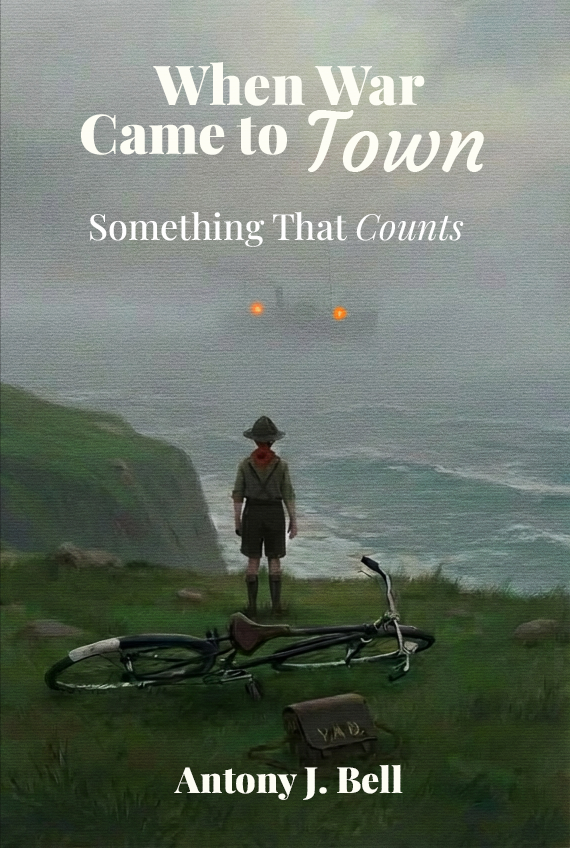
George Harland Taylor is the historical subject of my forthcoming novel, When War Came to Town. The book is rooted in the documented events of the Scarborough bombardment and the civilian experience of that morning.
While the novel is a work of fiction, this article is not. The facts presented here are drawn from contemporary newspapers, memorial records, and published accounts of the East Coast raids. George’s real life—and real death—stand on their own.
As the novel approaches publication, my aim is not to dramatise his story, but to ensure it is remembered.
Because the war did not only take soldiers.
Sometimes, it took boys on their way to the shop.
FAQs About The Scarborough Bombardment?
What was the Scarborough Bombardment?
The Scarborough Bombardment took place on 16 December 1914, when German naval forces shelled the coastal towns of Scarborough, Whitby, and Hartlepool. Scarborough was an undefended civilian town, and the attack resulted in widespread damage, civilian casualties, and national outrage in Britain.
Why did the Germans attack Scarborough?
The precise motive remains disputed. Some German sources claimed military targets such as coastal installations or wireless stations, while British investigations concluded the town itself was deliberately shelled. What is certain is that the attack had little military value and struck predominantly civilian areas.
How many people were killed during the Scarborough Bombardment?
In Scarborough alone, 17 people were killed outright, with two more later dying from their injuries. More than 80 civilians were seriously wounded. Victims included men, women, and children, ranging in age from a fourteen-month-old infant to elderly residents.
Was Scarborough defended at the time of the attack?
No. Scarborough had no effective coastal defences in December 1914. This fact was widely reported at the time and contributed to public anger, as the shelling of an undefended town was seen as a breach of accepted conduct in warfare.
Why is George Harland Taylor remembered today?
George Harland Taylor was a 15-year-old Boy Scout killed by shrapnel during the bombardment while running an errand on Albion Street. He is believed to be the only Boy Scout killed in action on British soil during the First World War, making his death a unique and poignant part of the event’s history.