
Every novel starts somewhere. The Fate of Rosie Morn started with a name in a list of lost ships: a small Scarborough trawler, a date in January 1916, and two local men who went down with her. The Story of the Real Rosy Morn.
The book is fiction. The boat was real.
Built in Aberdeen, registered in Scarborough
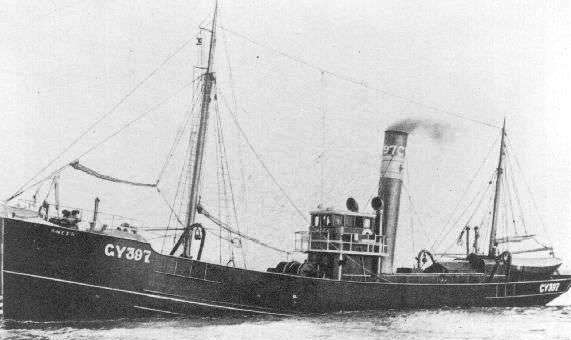
The Rosy Morn was built in 1914 by Alexander Hall & Co. at Footdee in Aberdeen, one of the great Scottish yards that turned out steam trawlers by the hundred. She was a steel-hulled, screw-driven steam trawler of 181 gross tons, the kind of hard-working boat that filled every fishing port on the east coast.
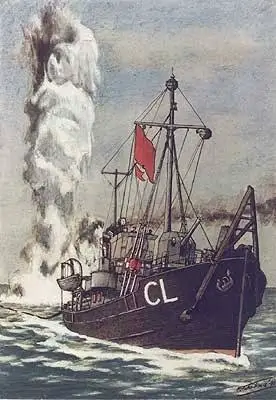
Her owners were the Dogger Bank Steam Trawling Company of Scarborough, and she was registered in the town as SH 59. The SH stood for Scarborough, painted large on her bow so that anyone on the water could tell where she came from.
She was brand new when the war began. For a few months she did the job she was built for: steaming out to the fishing grounds, shooting her trawl and bringing the catch back to the harbour.
Called up: May 1915
In May 1915 the Admiralty took her.
By then the Royal Navy had a problem it had not planned for. German ships and submarines were sowing mines across the North Sea and off the English coast, and the Navy did not have nearly enough vessels to clear them. The answer was the fishing fleet. Steam trawlers were tough, built for rough water, and already fitted with the winches and heavy wire needed to drag a sweep. Their crews knew the sea better than anyone.
The Rosy Morn became one of hundreds of hired trawlers in Admiralty service. She was given the Admiralty number 2770 and armed with a single 6-pounder gun. Her crew, fishermen and seamen enlisted in the Royal Naval Reserve’s Trawler Section, joined what the rest of the Navy called, half in mockery and half in respect, “Harry Tate’s Navy”.
The work was simple to describe and dangerous to do. Two trawlers steamed side by side with a wire slung between them, dragging it through the water to snag the cables that held mines just below the surface. When a cable parted, the mine bobbed up and was sunk or destroyed by gunfire. One mistake, or one mine the sweep missed, and the boat itself could go.
13 January 1916
The Rosy Morn‘s war lasted eight months.
On 13 January 1916 she struck a mine in the North Sea and sank. Records of her loss place it near the Dogger Bank, the great shallow fishing ground she had been built to work.
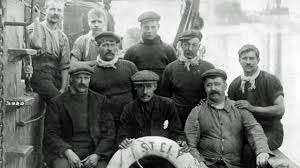
Most of her crew survived. Two men did not: William Topping and John Barber, both from Scarborough. Like so many who were lost at sea in that war, they have no grave. Their names are all that remain.
It is hard now to picture how ordinary this was. Losses like the Rosy Morn rarely made headlines. A trawler went out, a trawler did not come back, and a few families in a fishing town learned that someone was not coming home. Across the war the minesweeping trawlers paid a heavy price, and most of those losses have been all but forgotten outside the towns that suffered them.
Why the novel is different from the real story
When I came across the Rosy Morn, I had very little to go on: the year she was built, the month she was called up, the day she was lost and two names. Everything else had to be imagined. Once I started, I made some deliberate changes, and the biggest was moving her story forward by a year.
The real Rosy Morn was taken into service in May 1915 and lost in January 1916. In the novel, she is already sweeping mines in December 1914, and she is lost on 16 January 1915, almost exactly a year before the real date.
The bombardment of Scarborough
The main reason is 16 December 1914. That morning, German warships appeared off Scarborough and shelled the town. Eighteen people were killed and many more were injured. Houses, churches and hotels were hit, and families ran for the railway station or the roads out of town. For the first time in centuries, people in an English town were killed at home by an enemy at sea.
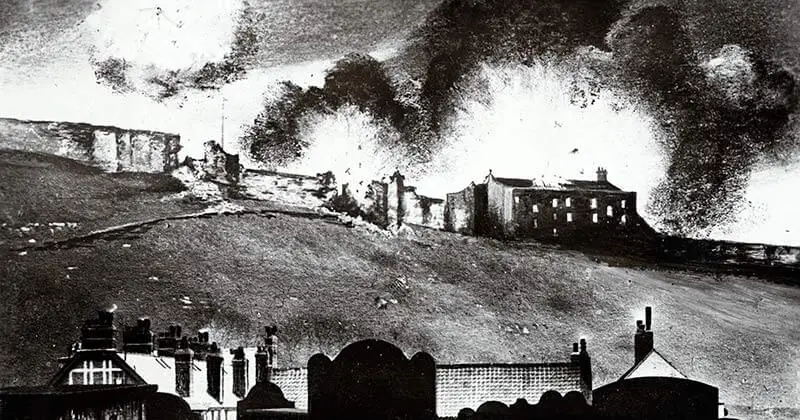
I wanted Will’s story to begin there. A war that is happening in France is something a seventeen-year-old reads about. A war that blows the front off a house in his own street, kills people he knows and frightens his mother is something he has to answer. The bombardment gives Will his reason to go to sea, and it gives the whole town the anger and the fear that run through the book.
The minefield on the doorstep
There was a second reason, and it is one of the parts of the story that is entirely true. During the raid, the German cruiser Kolberg laid a large minefield off the Yorkshire coast between Scarborough and Filey. Within days it was sinking ships. Clearing it fell to the trawlers.
So the mines Will helps to sweep in the novel are the mines left behind by the attack on his own town. Setting the book in that first winter of the war ties the two halves of the story, the town and the sea, into one.
Harry Tate’s Navy at the beginning
In the winter of 1914 the trawler minesweeping service was still very new. Fishermen were being put into naval uniform and sent out with little training, using their own boats, their own skills and a great deal of improvisation. That rawness suited a story about a boy trying to learn a dangerous job among men who are still working it out themselves.
One winter
Finally, the novel needed a tight timescale. The real Rosy Morn served for eight months. Will’s story is told over a single winter, from the bombardment in December to the loss of the boat in January. Compressing it keeps the pressure on, and keeps every day at sea close to the last one.
Real names, invented lives
William Topping and John Barber were real men, and I chose to use their names because forgetting them seemed worse. But I know almost nothing about their lives, and I did not want to put words in the mouths of real people or pretend to tell their true story. So everything around them is invented: Will’s family, the skipper, Charlie, Ned and the rest of the crew, and what happens aboard. Men very like them crewed every hired trawler on the coast, but these particular men never existed. The boat’s name is spelled Rosie in the novel.
What I kept were the things that matter: a Scarborough trawler, a crew of fishermen doing a naval job they were never trained for, the mines in the North Sea, and two men who went out on her and never came home. The Fate of Rosie Morn is written in their memory, and in memory of all the men of Harry Tate’s Navy who swept the North Sea clear and were so rarely thanked for it.
Read the novel
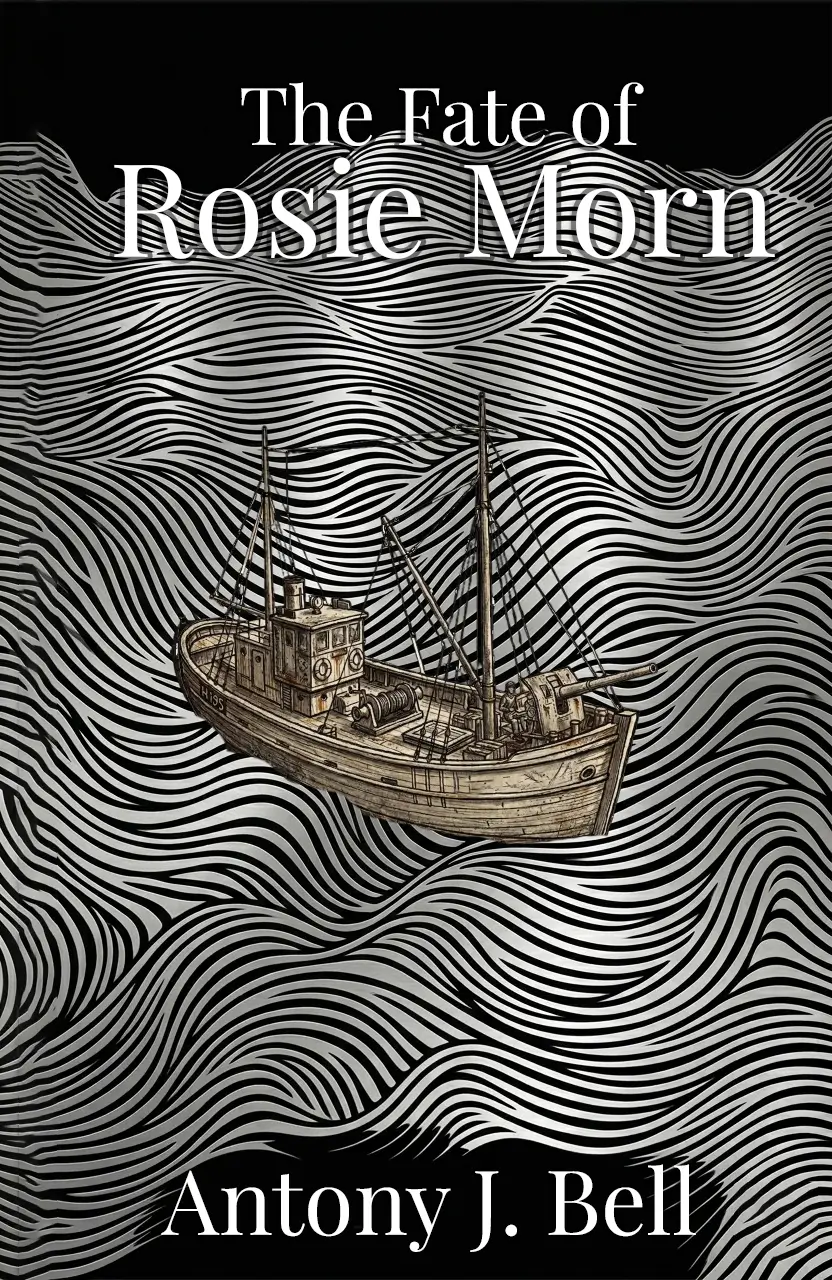
The Fate of Rosie Morn follows seventeen-year-old Will Topping aboard a Scarborough trawler turned minesweeper in the winter of 1914–15: a coming-of-age story about belonging, courage and the cost of having something to prove.