
How the Scarborough Raid Was Meant to Frighten Britain
Scarborough Raid – On the morning of 16 December 1914, Scarborough was not attacked because it was a military prize. It was attacked because it was familiar, recognisable, and unmistakably civilian. German battlecruisers fired hundreds of shells into a seaside town whose landmarks were known far beyond the Yorkshire coast. The purpose was not occupation or supply disruption. It was fear.
Scarborough would be remembered not for tactical importance, but because civilians were killed in places associated with safety, leisure, and guidance. Babies died in their homes. Families were buried together. The attack cut directly through the idea that war belonged elsewhere.
A Town Chosen to Be Noticed
Scarborough was a resort town, not a garrison. It had no heavy coastal guns, no entrenched defences, and no large military presence. Its value lay in visibility. The town faced the North Sea openly, its buildings rising clearly from the cliffs and bays. It was the sort of place people recognised instantly.
German naval planning under Admiral Franz von Hipper aimed to place pressure on Britain by striking where the shock would travel furthest. A hit on Scarborough would not stay local. News of civilian deaths in a well-known holiday town would move through newspapers, churches, workplaces, and homes across the country.
This was an attack designed to be talked about.
The Scarborough Bombardment
Terror as a Naval Weapon
By late 1914, German naval strategy had begun to extend beyond fleet engagements. Raids on the east coast were intended to show that Britain’s naval superiority did not guarantee safety. If towns could be shelled without warning, the population would feel exposed.
The message was simple and deliberate:
- the sea was no longer a shield
- distance did not protect civilians
- the war could arrive without notice
Scarborough was an early example of this approach. It came before widespread air raids, before sustained attacks on cities, and before civilians fully grasped their vulnerability.
The Hotel: Civilian Comfort Turned Into a Target
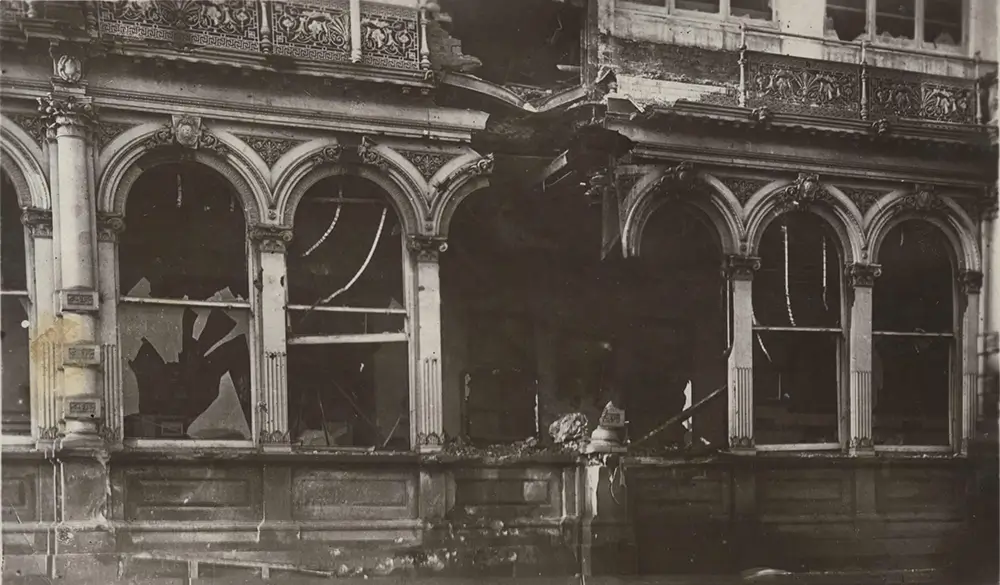
One of the most striking features hit during the raid was the Grand Hotel. Overlooking the bay, the hotel was a defining feature of the town. It represented holidays, leisure, and middle-class security. From the sea, it was impossible to miss.
Shells struck the hotel and surrounding properties. Nearby boarding houses and guest lodgings were also hit. These were not places connected to command or supply. They were spaces where families slept, visitors stayed, and everyday life continued despite wartime uncertainty.
By striking a hotel, the Scarborough Raid erased any remaining separation between combat and civilian life. If a hotel could be shelled, then no civilian building could claim safety.
The Castle: Protection Misread or Ignored
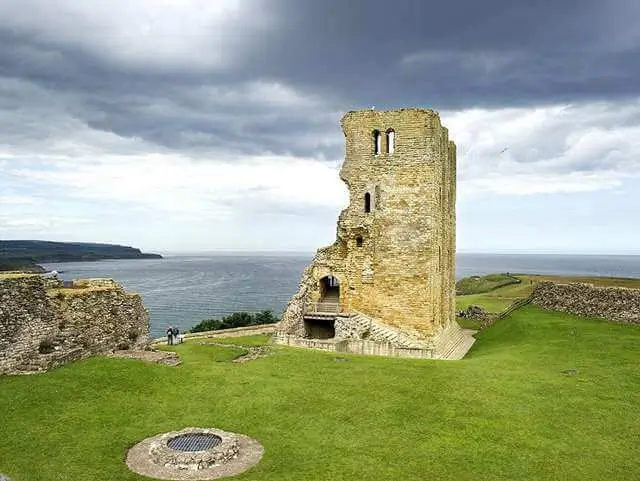
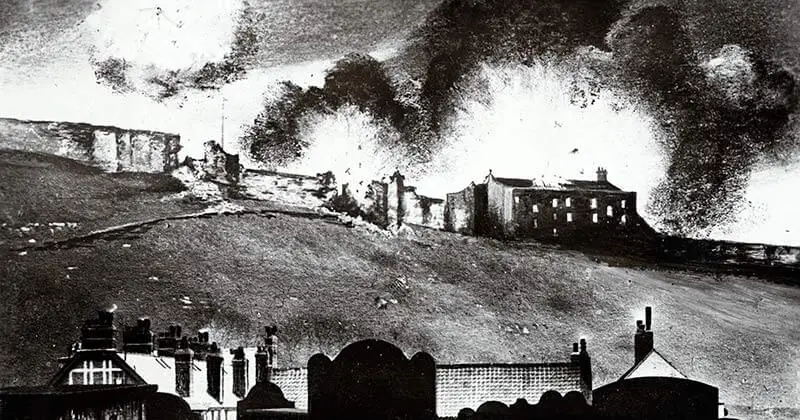
High above the town stood Scarborough Castle, a structure that had symbolised authority and protection for centuries. Its elevated position made it a natural reference point for ships offshore.
From a naval viewpoint, the castle may have been taken for a fortified position or assumed to hold military value. Whether misidentified or deliberately chosen, it drew concentrated fire. Shells damaged historic stonework and sent debris into streets below, increasing risk to nearby homes.
The castle’s prominence turned height into danger. A landmark long associated with defence became a conduit for harm. The effect on residents was immediate and unsettling: even the town’s oldest stronghold offered no shelter.
The Lighthouse: Height, Darkness, and Fear
Scarborough’s lighthouse stood as a marker of guidance and safety, its height intended to warn ships away from danger. During the war, blackout rules extinguished coastal lights to prevent aiding enemy vessels. The absence of light altered how the coast felt and functioned.
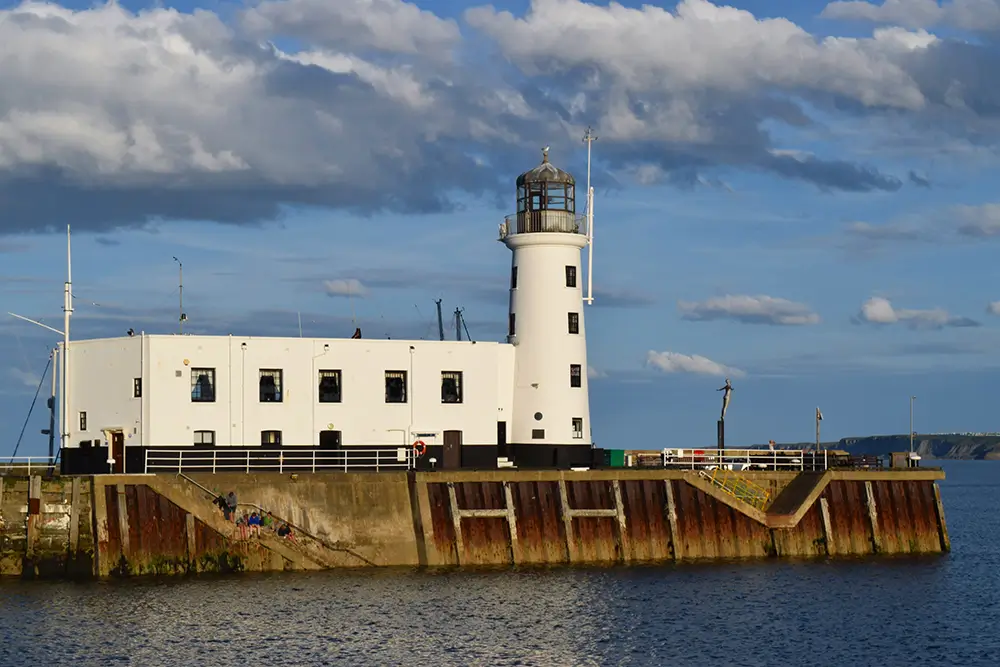
The lighthouse was not destroyed, but its role changed. Darkness along the shore fed suspicion and anxiety. Civilians worried about unseen ships offshore, about signalling, and about threats that could not be watched or measured.
A structure once linked to reassurance became part of a landscape of uncertainty. Height and visibility, once assets, now seemed to invite attention.
Civilian Deaths Were Central to the Shock
The Scarborough Raid killed 18 civilians in Scarborough. Among the dead were women, children, and infants. Entire households were struck when shells hit residential streets. The youngest victim was little more than a year old.
These deaths were not a side effect. They were the reason the raid achieved its effect. The killing of civilians in their homes turned the attack into a national event. It showed that innocence offered no protection and that war did not respect age, class, or distance from the front.
Scarborough entered public memory because of who died, not simply how many.
“We Can Reach You Anywhere”
The Scarborough raid formed part of a broader pattern. On land, artillery slaughtered soldiers in France and Belgium. At sea, warships shelled towns. Soon, Zeppelins would cross the North Sea and drop bombs on cities.
The same warning ran through each method:
- danger could come from any direction
- civilians were exposed
- fear itself was useful
Scarborough was one of the first places in Britain where that warning arrived fully formed.
Why These Landmarks Still Matter
The hotel, the castle, and the lighthouse were not military installations. They were civilian reference points. Their presence in accounts of the raid explains why Scarborough remained fixed in national memory.
The town did not suffer the highest casualty figures of the war. It did not hold strategic resources. What it represented was the collapse of reassurance. Familiar buildings became evidence that war had crossed a boundary.
“Remember Scarborough” entered public language because the message was clear and unsettling.
Writing Toward Meaning
The Scarborough Raid continues to shape how early modern war is understood in Britain. It stands at the moment when civilians recognised that the conflict would reach into homes, streets, and places of rest.
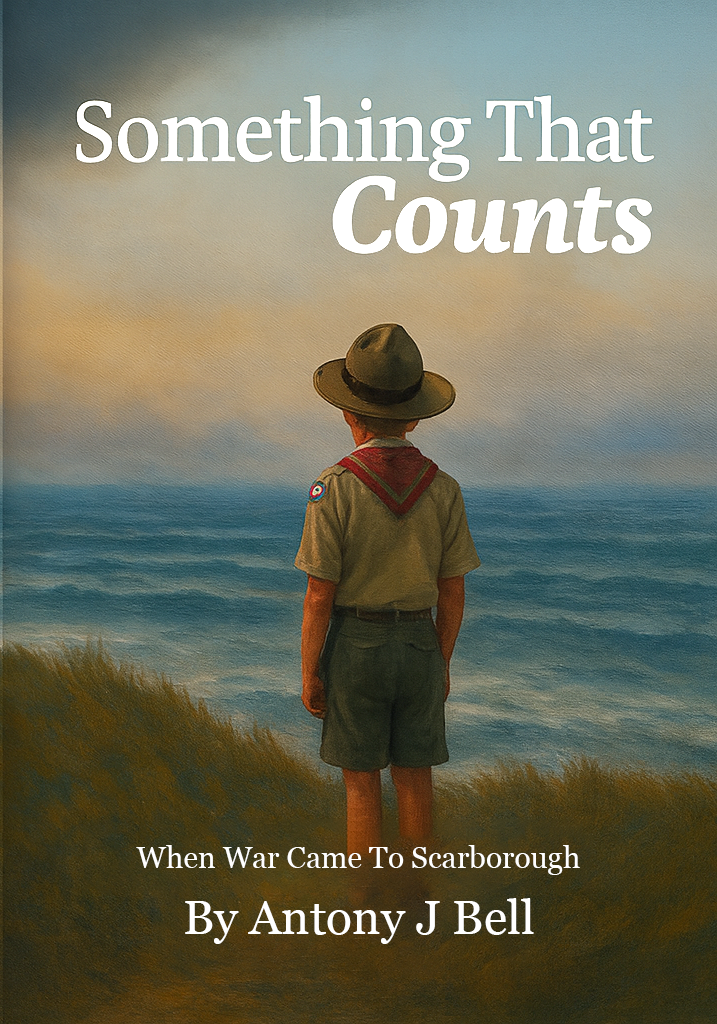
That understanding sits at the heart of my forthcoming novel, Something That Counts, which explores how ordinary lives are altered when distant events suddenly become immediate and unavoidable. The story is fictional, but the fear, loss, and exposure it examines are grounded in moments like Scarborough in December 1914.
The hotel, the castle, and the lighthouse still stand today. They remain part of a town shaped by a morning when safety was stripped away, and when Britain learned that modern war did not stop at the shoreline.