
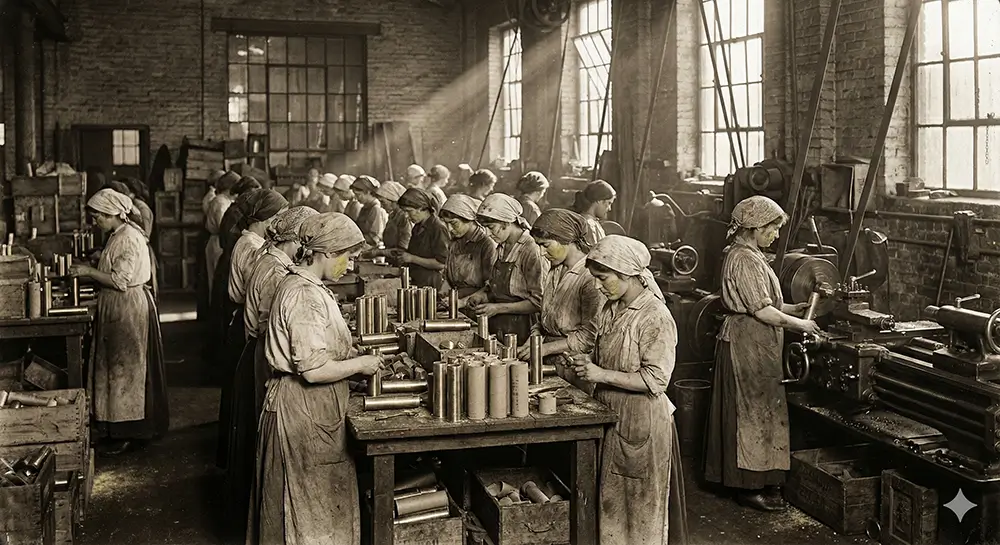
The Barnbow Canaries – At Barnbow, a vast 1915 munitions factory near Leeds, thousands of women worked long, regimented shifts filling shells with TNT that stained their skin yellow and damaged their health.
They faced toxic dust, boiling vats and poor ventilation that caused nausea, weakness, discoloured urine and sometimes death from so-called “chemical complications”. Official reports frequently downplayed accidents and kept families in the dark during the Great War. Today, memorials and archives help restore the names and stories of the Barnbow Lasses, allowing fuller accounts of their lives and the aftermath to emerge.
Key Takeaways on The Barnbow Munitions Factory
- Barnbow was a 1915 munitions factory near Leeds employing thousands of women in round-the-clock shell filling.
- Repeated handling of TNT stained workers’ skin and clothing bright yellow, earning them the nickname “Barnbow Canaries.”
- TNT exposure caused toxic jaundice, nausea, weakness and discoloured urine as absorbed chemicals were metabolised.
- Poor ventilation, long shifts and limited health protections exacerbated illness and workplace accidents.
- A 1916 explosion killed 35 women; official reports downplayed chemical harms, later addressed through memorials and oral histories.
Barnbow’s Rise: Yorkshire’s Vital Munitions Factory
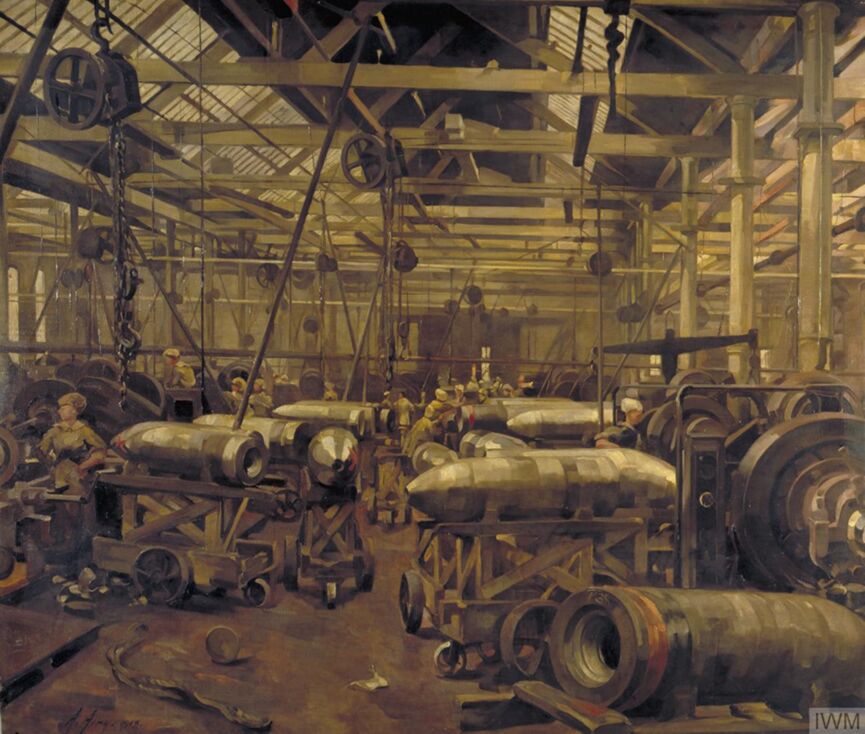
When the British government urgently expanded its munitions programme in 1915, Barnbow rose from farmland into one of the nation’s largest National Filling Factories. Strategically located near Leeds, the site combined relative safety from coastal attack with excellent rail links to Castleford, York and Selby. Officials viewed it as ideal, but it was Yorkshire’s skilled, adaptable workforce—mill girls, domestic servants, farm labourers and teachers—that turned Barnbow into a production powerhouse.
The factory reconfigured local labour markets, altered patterns of work and politics, and drew thousands of women into a new regime of industrial discipline. Beneath impressive productivity figures, however, lay the hidden toll of TNT poisoning and the loss of female life that shadowed Barnbow’s achievements.
Inside the Lines: Daily Life and Dangerous Workflows
Within Barnbow’s workshops, regimented shifts and strict routines sustained an unforgiving pace. Women clocked in for twelve-hour rotations, moved between filling, tamping and sealing shells, and followed precise handling protocols while working around boiling vats, dust-filled air and constant TNT contamination on benches and clothing.
The daily rhythm included roll call, the issuing of protective garments, measured scoops of explosives and cleanliness checks intended to limit contamination. Life on the lines blended monotony with danger as workers were expected to balance speed and accuracy against the risk of fatal mistakes.
Wartime secrecy muted warnings about TNT poisoning and toxic jaundice, and many Yorkshire women accepted these risks in exchange for wages, independence and a sense of patriotic duty. Their resilience sustained production even as the hidden health costs continued to mount.
The Science of Yellow: How TNT Caused Toxic Jaundice
These routines and hazards formed the backdrop to a biochemical story. Repeated handling and inhalation of trinitrotoluene (TNT) produced measurable, damaging effects on the body that explain the Barnbow Canaries’ distinctive yellow skin.
TNT metabolites entered the skin and bloodstream, breaking down red blood cells and burdening the liver. Clinicians described a condition known as toxic jaundice: bilirubin accumulation produced the saffron hue and systemic signs—nausea, weakness and discoloured urine—recorded among many women in munitions factories.
At Barnbow, limited ventilation and prolonged exposure intensified chemical complications and other health effects. Contemporary medical reports linked exposure level and duration to severity, but wartime production demands constrained prevention and mitigation.
Understanding this pathology helps clarify why so many Yorkshire women bore visible harm while continuing to show remarkable resilience amid industrial sacrifice.

Lives Lost and Loud Silence: Accidents, Illnesses, and Secrecy
Barnbow’s contribution to the war effort was significant, yet its story is threaded with accidents and an official silence that often obscured their scale. Explosions such as the 5 December 1916 blast that killed thirty-five women were recorded in brief, sanitised notices, while countless cases of toxic jaundice and chronic illness were entered as vague “chemical complications”.
A pattern emerges: lives were lost both to sudden blasts and to slower TNT poisoning; illnesses were minimised in official records; and many families received little meaningful explanation. The Barnbow Canaries faced both immediate deaths and long-term health consequences, while the deaths of 35 women were long treated as a statistic rather than individual tragedies.
This culture of secrecy obscured hidden dangers, obstructed accountability, and limited the development of appropriate medical responses.
Remembering the Canaries: Memorials, Stories, and Legacy
Today, memory endures in stone, metal and story. In places such as Crossgates, the Barnbow Canaries are commemorated through memorials, plaques, archival projects and oral histories that reclaim names once suppressed by wartime secrecy.
Carved lists restore the identities of women who lost their lives, while interpretive panels explain TNT exposure, toxic jaundice and the yellow skin that defined the “canaries.” Local historians preserve stories of women such as Agnes and Edith alongside those of anonymous labourers, situating individual loss within the broader history of Leeds and the First World War.
These efforts trace how determination and solidarity shaped workplace responses, condolence rituals and later campaigns for recognition. The legacy of Barnbow is increasingly framed not as tragedy alone, but as evidence of industrial sacrifice, civic memory and a moral reckoning with wartime policy.
Conclusion
The story of the Barnbow Canaries combines dignity and grief: bright yellow hands that filled shells for the front; pale records that hid deaths and illnesses. It juxtaposes midnight laughter in the canteen with official forms marked “chemical complications,” roaring machines with fragile bodies, civic urgency with suppressed truth.
Within that contrast, the Canaries remain a visible testimony to the hidden costs of industrial warfare, reminding historians and readers alike that national triumph often conceals its deepest human price behind official silence.

FAQs About TNT Poisoning
1. What is TNT poisoning?
TNT poisoning occurs when a person is exposed to trinitrotoluene, a chemical used in military explosives. In munitions factories during WWI, workers absorbed TNT through their skin, inhaled the dust, or ingested traces inadvertently. Over time, the chemical damaged red blood cells and the liver, leading to a condition once called toxic jaundice, where the skin turned yellow.
2. What were the typical symptoms of TNT poisoning?
Common symptoms included headaches, dizziness, nausea, fatigue, shortness of breath, and yellow discoloration of the skin. Some workers also experienced dark urine, rapid heartbeat, and general weakness. In severe cases, TNT exposure could cause significant liver damage and other serious complications.
3. Why did munitions workers turn yellow?
The yellow skin tone came from TNT breaking down inside the body. A by-product of TNT metabolism bound to proteins in the skin and changed the pigment, causing workers to develop the distinctive “canary yellow” colour. This discolouration was most noticeable on the hands, face, and hairline.
4. Was TNT poisoning dangerous or fatal?
For many, symptoms eased once exposure stopped. However, prolonged or intense exposure could be dangerous. Some munitions workers developed chronic health issues, and a number of deaths during WWI were attributed to TNT-related toxic jaundice. At the time, the risks were often downplayed because shell production was considered a national priority.
5. How was TNT poisoning treated during the First World War?
Medical understanding was limited. Treatments typically included rest, fresh air, milk, barley water, and removal from the most dangerous work areas. Some women were reassigned to non-TNT roles until their symptoms improved. Workplace protections increased gradually, though conditions remained hazardous throughout most of the war.