

You’d find Barnbow Halt was a discreet wooden stop on a Leeds branch, built to shuttle thousands of women to the secretive Barnbow munitions works. Railway memos, sealed timetables and roll calls show trains timed to shifts and routed along the guarded Cleanway to the factory gate.
Police logs and payrolls record drills, the 5 December 1916 explosion and hurried evacuations. Archival maps and minute books trace the halt’s role; continue and you’ll uncover more documentary detail.
Key Takeaways
- Barnbow Halt was a discreet wooden railway stop built to transport large numbers of munitions workers quickly and covertly during WWI.
- Purpose-run trains carried thousands of predominantly female workers, synchronised tightly with factory shift timetables.
- The Cleanway route linked the halt to the factory, a controlled corridor with patrols, turnstiles, and orderly worker files.
- A catastrophic explosion on 5 December 1916 in Room 42 prompted secret evacuations and emergency improvisation for trainloads of women.
- Archival memos, payrolls and coroner reports preserve Barnbow Halt’s role in labour mobilisation and local commemoration.
A Platform Built in Secrecy for a Wartime Need
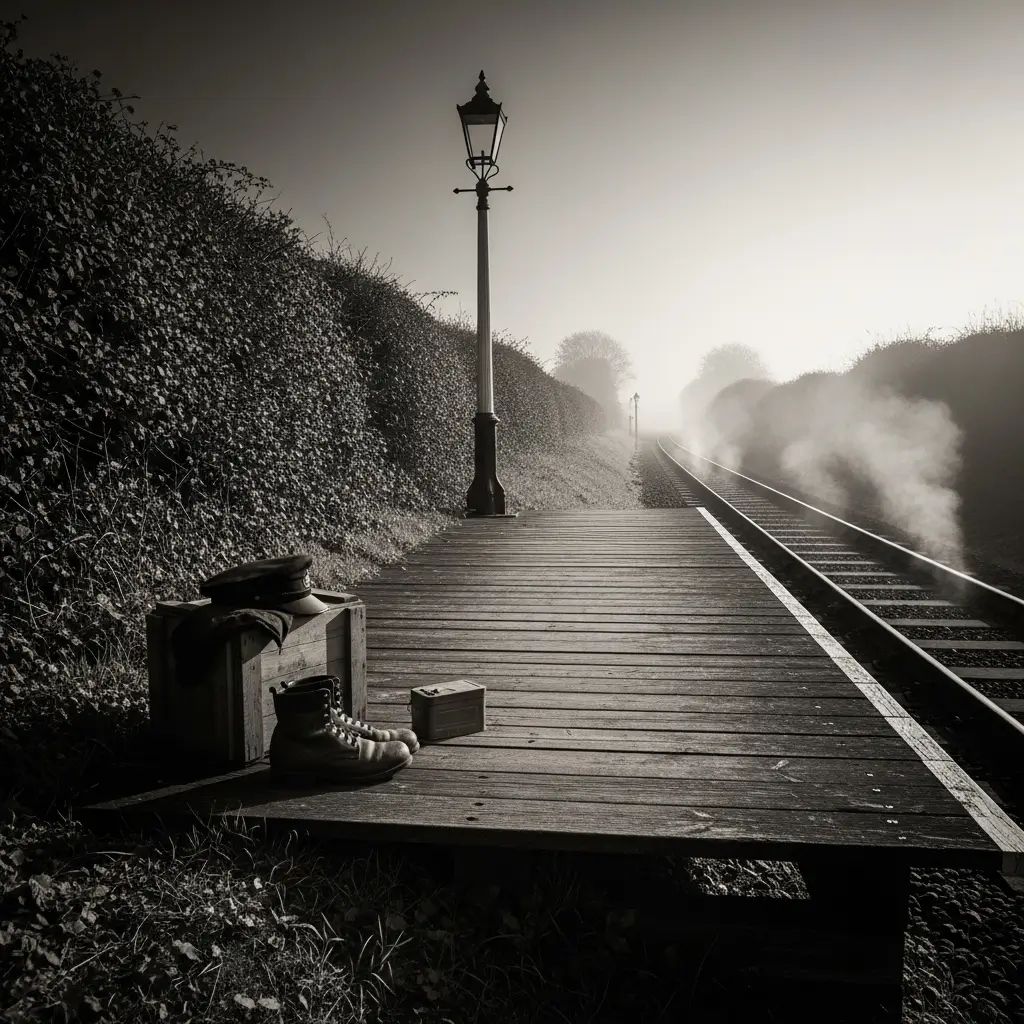
Because speed and secrecy mattered more than comfort, officials commissioned a minimal wooden halt beside the Leeds–Cross Gates–Garforth line to serve the Barnbow munitions works—an arrangement recorded in wartime railway memos and local council minutes now held in the Leeds archives.
The records describe dry administrative entries detailing siting, timber supply and restricted access. Barnbow Halt was a pragmatic solution built to move workers to a shell-filling complex without drawing attention to the scale of wartime production.
Archival correspondence emphasises sealed schedules and plain, unmarked platforms intended to preserve secrecy even after the 1916 explosion. Regional notes place the halt within the broader railway network and reference the Barnbow Lasses by role rather than by name, offering precise governance details for researchers.
A pragmatic wooden halt beside the Leeds–Cross Gates–Garforth line, discreetly built to ferry workers to Barnbow’s munitions works
Trainloads of Women: Commuting to the Munitions Works
Thousands of women boarded purpose-run trains at dawn and dusk to reach Barnbow. Wartime railway logs and factory roll calls chart these journeys, recording origins, timetables and carriage allocations with striking specificity.
Entries show male and female munitions workers travelling to Barnbow Halt from Leeds suburbs and surrounding villages. Railway schedules were synchronised with shift patterns at the shell-filling factory; archival manifests list carriage numbers, cohorts of female operatives and emergency contingencies devised under secrecy.
These documents enable reconstruction of daily commutes and reveal the regional labour geography that supplied the filling factory.
The Cleanway: From Halt to Factory Gate
Stepping off the unadorned platform at Barnbow Halt brought workers directly to the Cleanway—a narrow, fenced path cutting across fields to the factory gate. Wartime plans, police logs and oral testimony map its precise alignment and everyday function.
Archival maps identify the Cleanway as a controlled access corridor populated with patrol posts, turnstiles and sentry boxes recorded in factory reports and board minutes. Contemporary accounts describe disciplined files of women walking from the halt to the shell-filling sheds, a routine that became part of the factory’s tightly managed rhythm.
Police notes document roll calls along the route, while personal testimonies recount whispered warnings and shared anxieties. The Cleanway mediated secrecy and efficiency, guiding the movement of thousands while minimising sightlines into the factory and reducing reconnaissance risks.of factory workers while minimizing sightlines to the munitions factory and risk of reconnaissance.
The Night of the Explosion and Its Aftermath
The explosion of 5 December 1916 disrupted every pattern that governed Barnbow Halt and the Cleanway. The blast in Room 42 sent shockwaves across the factory and surrounding fields, rupturing the controlled system that transported workers to and from their shifts.
Archive reports and local testimony record how trainloads of confused, traumatised women were escorted away under strict secrecy. Emergency drills collapsed into improvisation as corpsmen, managers and fellow workers acted as first responders.
The surviving documentation is sparse but revealing. Payrolls, platform logs and coroner files capture hurried evacuations, lists of names compiled in haste, dust-streaked clothing, and terse official instructions issued in the aftermath. These fragments convey both the immediacy of the tragedy and the silence that followed.
Remembering Barnbow: Memorials and Modern Traces
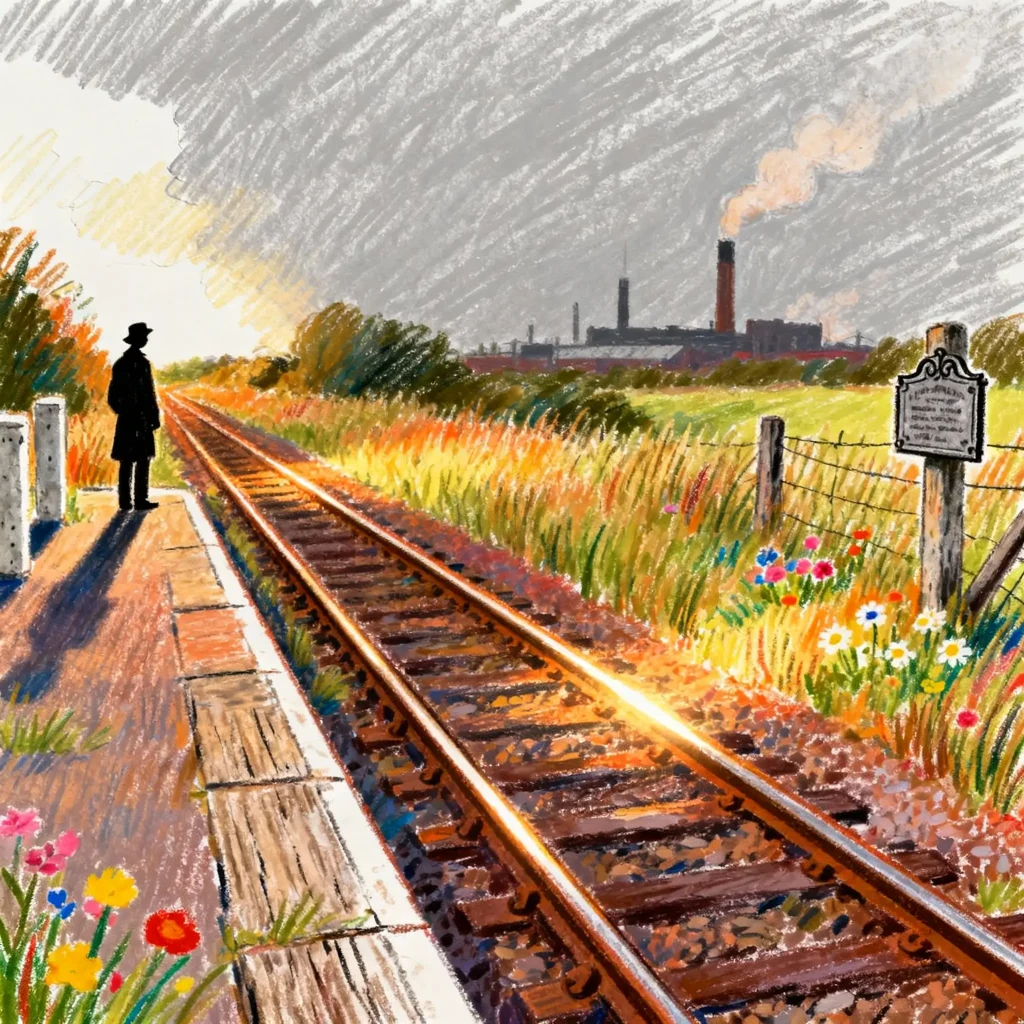
After the shock and secrecy of December 1916, Barnbow’s memory persisted through ledgers, coroner reports and subtle marks on the landscape. Today, archival traces shape how the site is commemorated in the region.
Minute books, payrolls and maps show how the railway halt linked countryside to factory and sustained the daily movement of munitions workers. Local memorials and heritage boards interpret the explosion and honour the women’s sacrifice, grounding their narratives in primary sources.
Walking the line where Barnbow Halt once stood reveals faint earthworks, plaque sites and informational panels situating the factory within regional industrial history. Together, these physical and documentary traces enable a reading of labour, loss and communal remembrance.
Conclusion
Stepping back from the documented history of Barnbow Halt reveals the quiet infrastructure that ferried a female wartime workforce to carry out the nation’s urgent business. Coal-scented scarves, clipped timetables and the Cleanway’s modest gate evoke a world where industrial risk and secrecy collided. The softened truth of that December night—an industrial disaster folded into local memory—survives through archival remnants and modern memorials alike.

FAQs About the Barnbow Halt
What was the Barnbow Halt railway station and why was a railway stop created?
Barnbow Halt railway station was a small stop on the line from Leeds to Selby built principally to serve the Barnbow munitions factory in Yorkshire during the First World War. Constructed in response to the surge in munitions production after the declaration of war with Germany, the halt allowed workers to travel directly into the factory complex and supported the massive factory buildings that were quickly erected to meet volumes of arms and munitions needs.
Where in Yorkshire was the railway station located and which lines served it?
The halt was sited near Barnbow Lane, between Crossgates and Garforth on the line from Leeds to Selby and provided connections toward Leeds to Selby and York. It sat close to Shippen House Farm and the main factory complex, offering an essential transport link for the city of Leeds and surrounding communities such as Garforth.
When and why did the Barnbow munitions factory expand, prompting the halt’s use?
The Barnbow munitions factory expanded rapidly from 1914 and into December 1915 and beyond as the First World War intensified. The first national shell filling factory and later national filling factory works, including an amatol factory and filling factory buildings, were established to meet urgent munitions production needs overseen by the Ministry of Munitions and local bodies like the Leeds munitions committee.
Who used the Barnbow Halt and what kinds of workers traveled there?
The halt was principally used by munitions workers at the nearby Barnbow complex, including many women known locally as the Barnbow canaries. Trains often carried large numbers — at times special Barnbow specials — of staff coming from Leeds, Crossgates and Garforth, and workers included those organized by the First World War staffing systems, with stories noting both collective sacrifice and the organisation of the factory staff.
How did the halt and rail services integrate with the factory buildings and internal transport?
Barnbow Halt allowed workers to disembark close to the factory complex and walk down Barnbow Lane into the extensive cartridge factory buildings and main factory. The rail access meant staff could be delivered directly into the factory complex, supporting shifts in enormous filling factory buildings and reducing reliance on local transport; many services ran specifically to move personnel and materials between the line and the factory.
What facilities and on-site services supported munitions workers at Barnbow?
The industrial site included canteens, main factory and Wellesley-like support structures, and extensive factory buildings for assembly and filling. There were arrangements for first aid and welfare; anecdotes reference the canteen and the need to manage explosive materials such as cordite and other filling ingredients, while nearby agricultural details — like 120 cows or “plenty of milk” stories — show how local supply and community life connected to munitions production.
What happened to Barnbow Halt and the factory after the end of the war?
After the end of the war, production declined and many filling factory buildings were put into surplus war disposal programmes; some facilities were repurposed or dismantled. The halt’s use fell sharply as the First World War demand for shells and explosives ceased, and while some remnants of the works continued in various forms, much of the wartime infrastructure was no longer needed.
How is the story of Barnbow and its railway remembered today?
The story of Barnbow is preserved through local histories, memorials and accounts of the sacrifice of the munitions workers, including the tragic events affecting 35 women and three men in incidents that highlight workplace danger. Local groups and historians recount the role of Leeds forge company contracts, the involvement of the Leeds munitions committee, and the way the Barnbow halt and Barnbow munitions factory contributed to national efforts during the First World War.