Best WWI Historical Fiction Books – If you’re looking for the best World War One historical fiction books, chances are you don’t just want a list of titles — you want stories that make the war feel real. Novels that go beyond dates, battles, and uniforms, and instead show how the Great War changed people, fractured families, and reshaped society in ways that still echo today.
WW1 fiction works best when it refuses to romanticise the conflict. The strongest books capture the fear, exhaustion, love, grief, and moral uncertainty of a world tearing itself apart — whether that’s in the trenches, hospitals, shell-shocked minds, or homes left behind. Some novels achieve this through brutal realism, others through quiet emotional restraint, but the ones that last are those that leave a mark on you as a reader.
Best WWI Historical Fiction Books My List, my opinion from what I read
This list isn’t based on sales charts or popularity alone. These are World War One novels I genuinely rate as great reads — books that brought the period vividly to life for me, made me stop and think, and in some cases left me sitting in silence after the final page. Some are devastating. A few are uncomfortable. All of them, in their own way, feel honest.
If you want WW1 historical fiction that respects the subject, centres human experience, and doesn’t shy away from the cost of war, these are the books I would recommend — and why.
10 WWI Historical Fiction Books I Actually Recommend (And Why)
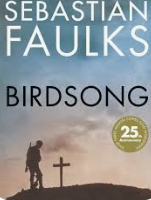
1) Birdsong — Sebastian Faulks (1993)
⭐️⭐️⭐️⭐️⭐️ (5/5)
This is one of those books that doesn’t just show you the Great War — it moves into your ribs and refuses to leave. What I love most is how Faulks frames the horror with tenderness: the pre-war calm, the mess of love and longing, and then that brutal drop into the tunnels and trenches. It’s not “action” in a Hollywood sense — it’s the slow, grinding, claustrophobic reality, and the emotional numbness that creeps in as a survival tactic. When it’s good, it’s breathtaking. When it’s brutal, it’s almost unbearable — and that’s exactly why it belongs on a WWI list.
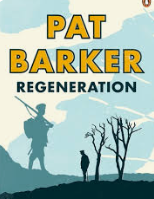
2) Regeneration — Pat Barker (1991)
⭐️⭐️⭐️⭐️⭐️ (5/5)
If you want a WWI novel that’s quiet but devastating, this is it. It’s basically a war story where the battlefield is the mind — officers broken by “shell shock,” and the impossible moral machinery of sending them back to the line. The reason I rate it so highly is because it asks hard questions without grand speeches. It shows how war reshapes masculinity, class, duty, even language — and it does it in a way that feels uncomfortably modern. It’s not always “pleasant” to read, but it is sharp, humane, and haunting.
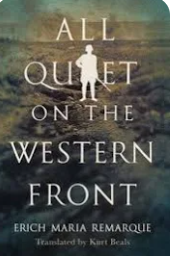
3) All Quiet on the Western Front — Erich Maria Remarque (1929)
⭐️⭐️⭐️⭐️⭐️ (5/5)
This isn’t just a classic — it’s a warning siren disguised as a novel. What hits hardest is the disillusionment: the early patriotic energy, then the grinding realisation that nothing about the front matches the speeches that sent them there. It brings the war to life in a blunt, physical way — mud, terror, hunger, dread — but the real punch is emotional: how the war steals the idea of a future. I wouldn’t call it “beautiful,” exactly. It’s more like: essential, brutal, and honest.
4) In Memoriam — Alice Winn (2023)
⭐️⭐️⭐️⭐️½ (4.5/5)
This one feels like it starts as an intimate story — school, friendship, forbidden love, that pressure-cooker Englishness — and then the war arrives like a door being kicked in. What I admire is how it refuses to keep the war at a tasteful distance. You feel that shift from youthful intensity to the machinery of mass death. Emotionally it’s a gut punch, and it’s also one of the better examples of how to write WWI with both tenderness and teeth. Not perfect for everyone (some will find parts almost too romantic in contrast with the horror), but overall: powerful and memorable.
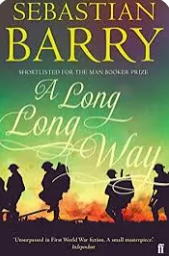
5) A Long Long Way — Sebastian Barry (2005)
⭐️⭐️⭐️⭐️½ (4.5/5)
This is the WWI novel I point people toward when they want something lyrical but still grounded. Barry writes with this aching, almost spiritual softness — and then he places it inside the ugliness of war and divided loyalties. What makes it stand out is the Irish angle: the sense of being pulled between identities, home and empire, duty and betrayal. It’s quieter than Birdsong, less “set-piece,” but it leaves a long shadow. It made me feel sad in a slow, sinking way — the kind you carry around all day.
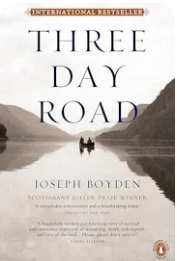
6) Three Day Road — Joseph Boyden (2005)
⭐️⭐️⭐️⭐️½ (4.5/5)
This is one of the most affecting WWI novels I’ve come across because it refuses to treat soldiers as generic figures. Two Indigenous Cree snipers, friendship under strain, survival, trauma — and the way the book moves between the war and the wilderness gives it a rhythm that feels different from the standard trench narrative. It’s brutal in places, but also strangely intimate. I’d recommend it to anyone who wants a WWI story that expands the frame beyond Britain/France/Germany and gives you a wider emotional and cultural perspective.
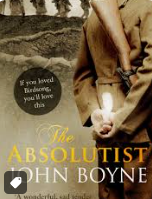
7) The Absolutist — John Boyne (2011)
⭐️⭐️⭐️⭐️ (4/5)
This one is for readers who like WWI fiction that’s partly a confession and partly a moral knot. It tackles love, shame, duty, and the kind of choices war forces on people — including the choices that don’t look heroic on a memorial. It’s compelling, but it can also feel deliberately controlled, like it’s tightening a screw rather than letting you breathe. Still: it sticks the landing emotionally, and it’s a strong reminder that WWI isn’t only about trenches — it’s also about what people carried home and couldn’t say out loud.
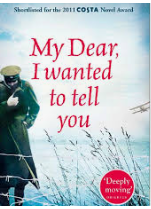
8) My Dear, I Wanted to Tell You — Louisa Young (2011)
⭐️⭐️⭐️⭐️ (4/5)
What I liked here is the breadth: it doesn’t trap you in one viewpoint. You get the war, yes — but you also get the home front, class, love, nursing, and the long tail of injury and reinvention. It’s more “novelistic” in the traditional sense — relationships, interwoven lives, a wider canvas — and it can be a great recommendation for people who want WWI history but need human connection to hold onto. Not the most original prose in the genre, but emotionally engaging and very readable.
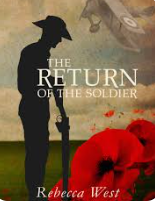
9) The Return of the Soldier — Rebecca West (1918)
⭐️⭐️⭐️⭐️ (4/5)
This one is short but sharp — and what’s fascinating is that it was written during the era, so it carries a different kind of insight. It’s about a man returning from the front psychologically damaged, and what that does to the people around him — love turning strange, identities shifting, the unsettling question of whether “recovery” is always what we think it is. If you want trenches and battles, this isn’t it. If you want the war’s emotional aftershocks inside a household, it’s a brilliant little knife of a book.
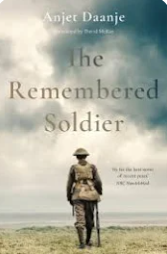
10) The Remembered Soldier — Anjet Daanje (English translation recent; WWI aftermath focus)
⭐️⭐️⭐️⭐️ (4/5)
This is one I’d recommend when someone says, “I want something about WWI that feels different.” It’s about identity, memory, and the strange aftermath of war — what happens when someone comes back and nobody can be sure who they really are anymore. The tone is unsettling in the best way: you’re constantly aware that war doesn’t end when the guns stop, it just migrates into people’s lives. It’s not as immediately “immersive” as Birdsong or All Quiet — it’s cooler, more psychological — but it’s the kind of book you finish and then keep thinking about in the shower.
Why World War One Fiction Still Matters
World War One is slipping out of living memory. No voices remain to correct us when we oversimplify it, tidy it up, or reduce it to dates and battles carved into stone. What we’re left with is interpretation — and that’s where historical fiction matters.
The best WW1 novels don’t replace history; they restore its weight. They remind us that the war wasn’t experienced as a neat sequence of events, but as confusion, fear, boredom, longing, exhaustion, and sudden violence. They show us the interior lives that never made it into official records: the thoughts men didn’t say aloud, the grief women carried in silence, the small moments that felt enormous at the time and were forgotten later.
The Books That Shaped How I See the Great War
Every book on this list helped shape the way I think about World War One. Some taught me restraint — how understatement can be more powerful than spectacle. Others showed me how to sit with discomfort rather than rush past it. Many reminded me that war is not just something that happens “over there”, but something that seeps into homes, bodies, relationships, and generations.
What stayed with me most was how these novels handle responsibility: the responsibility of remembering without glorifying, of witnessing without exploiting. They showed me that the quiet moments — waiting, working, worrying, enduring — are often where the real story lives.
Why I Wrote A Penny a Shell
Those lessons stayed with me when I came to write A Penny a Shell.
I didn’t want to write a story about heroics or simplified sacrifice. I wanted to write about ordinary women doing dangerous work, about fatigue and fear and duty colliding inside a single night shift. About how war asks things of people who never chose it, and then often forgets them once the work is done.
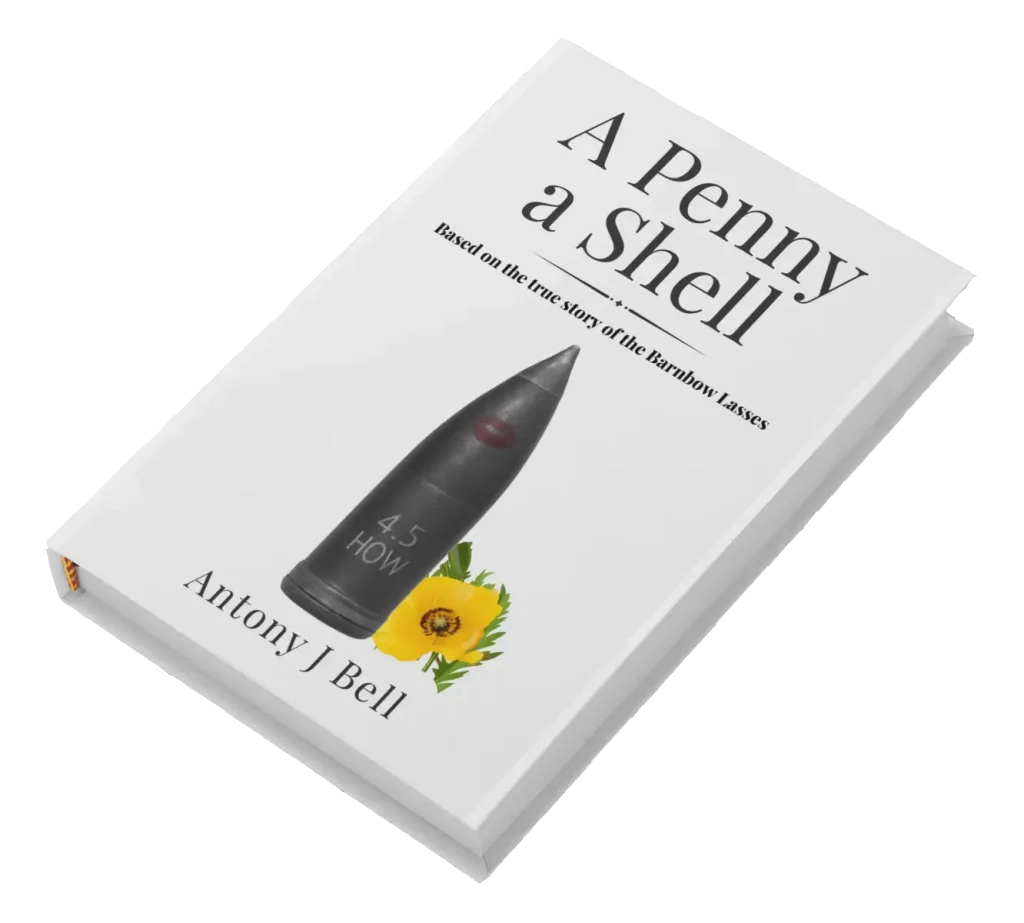
These books gave me permission to slow down, to focus on character, to trust quiet moments — and to believe that telling a smaller, more human story could still carry the weight of history.
Fiction, Memory, and Remembrance
World War One fiction still matters because remembrance isn’t passive. It isn’t just wreaths and anniversaries. It’s the active decision to keep asking what did this cost real people? Fiction, when it’s done honestly, keeps that question alive. It resists the smoothing-over of suffering. It gives shape to silence.
If even one of the books on this list makes you pause, unsettles you, or helps you see the First World War a little differently, then it’s doing the job these stories have always done — carrying memory forward, when memory itself can no longer speak.
FAQs For The Best WWI Historical Fiction Books
first world war: What are the best WW1 historical fiction novels to start with?
For newcomers, recommended first world war novels include Birdsong by Sebastian Faulks (set during the first world and famous for its portrayal of the Somme and the terror of bombardment), All Quiet on the Western Front (a cautionary novel about a young German soldier), and A Farewell to Arms by Ernest Hemingway (a wartime love story first published in 1929? — note: actually published 1929 but set during 1917–1918). These world war i books offer a mix of battlefield realism, intergenerational reflection, and literary power; they make excellent book recommendations for readers seeking both heart-rending action and thoughtful memoir-like prose.
memoir: Which novels read like memoirs or autobiographical novels about the Great War?
Several first world war fiction titles blur fiction and memoir. Testament of Youth by Vera Brittain is a biographical wartime memoir by a young Englishwoman and bestselling author that reads like an autobiographical novel about loss and the road back after 1919. Robert Graves’s Goodbye to All That and Siegfried Sassoon’s works combine poetical sensitivity and autobiographical detail; Wilfred Owen’s poetry and other poet-novelist accounts give a vivid, often cautionary, view of shell-shock and frontline experience.
ww1: Are there bestselling WW1 novels that focus on specific battles like the Somme or Ypres?
Yes. Birdsong by Sebastian Faulks (bestselling author) focuses on the Somme and life in the trenches, while works that evoke Ypres, Passchendaele and Flanders appear across first world war books and first world war fiction. Many bestselling world war i books create a world of mud, bombardment and valour and are praised for their historical detail and emotional impact.
first world war fiction: How accurate are first world war fiction books about places like Gallipoli and France during World War I?
Accuracy varies: authors such as Sebastian Faulks, Robert Graves and Ernest Hemingway grounded their fiction in thorough research or personal experience. Novels set during the first world often reference real events—Gallipoli, the Marne, the Somme, Passchendaele—and capture the social context in France during World War I and across the allied forces. Read accompanying memoirs and biographical accounts to separate invented drama from documented wartime fact.
world war i books: Which first published or early 20th-century novels are essential (1914–1919 period)?
Essential early works include A Farewell to Arms (published in 1929 but reflecting 1917–1918), Testament of Youth (Vera Brittain’s memoir of 1914–1919), and Robert Graves’s later autobiographical novels. For poetry and frontline testimony, Wilfred Owen and Siegfried Sassoon are indispensable for understanding shell-shock and the poet’s response to combat. These pieces capture the contemporary voice of the twentieth-century wartime generation.
best world war: What first world war books combine romance, conflict and literary power (e.g., tempestuoulsy loved characters)?
A Farewell to Arms by Ernest Hemingway is famous for its tempestuous love affair between an American ambulance driver and a British nurse, combining a young American’s perspective with battlefield horror. Birdsong features Stephen Wraysford, a young Englishman whose passionate relationship and front lines experiences create a world of poignant love and loss. These best novels balance romance with cautionary depictions of war’s devastation.
battlefield: How do novels portray psychological trauma like shell-shock and the aftermath for soldiers?
First world war books frequently depict shell-shock, trauma and the road back to civilian life. Writers such as Sassoon and Owen portray shell-shock candidly; modern novelists expand on that legacy, showing intergenerational effects and the difficulty of reintegration after 1919. Memoir-style works and biographical novels highlight how bombardment, trench warfare and repeated front lines service produced lasting psychological wounds.
ww1 novel: Can you recommend books featuring different national perspectives (British soldier, German soldier, American woman)?
Yes. For a British soldier’s view, Birdsong and works by Robert Graves are strong choices; Erich Maria Remarque’s All Quiet on the Western Front offers a German soldier’s perspective; Vera Brittain’s Testament of Youth gives the view of an American woman’s counterpart in the British context and an Englishwoman’s wartime experience. Combining these gives a fuller sense of allied forces, German and British viewpoints, and civilian wartime lives.
testament of youth: Why is Vera Brittain’s Testament of Youth still recommended among best novels about WW1?
Vera Brittain’s Testament of Youth is biographical, bestselling and heart-rending: it creates a world of loss after 1914, documenting how a young woman’s ideals are transformed by wartime bereavement and service. As both memoir and social history, it remains a cornerstone of first world war books for its literary power, honesty about grief, and its influence on later first world war fiction and novelists exploring conscience, valour and the costs of conflict.