
The First World War transformed quiet Yorkshire parishes into vast centres of high-explosive production. One of the largest was National Filling Factory No. 1, better known locally as Barnbow.
Between 1915 and 1918, the factory filled and dispatched more than 566,000 tons of ammunition to the front.
Yet while Barnbow’s output was remarkable, its history is remembered above all for the catastrophic explosion of 5 December 1916 — and the extraordinary courage of a factory mechanic named William Parkin.
A Self-Contained Industrial City
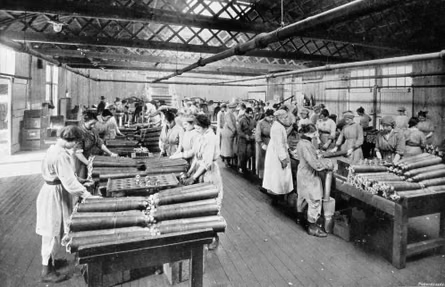
Barnbow was one of the most ambitious industrial sites built during the war. Covering around 200 acres, it operated day and night like a self-contained city.
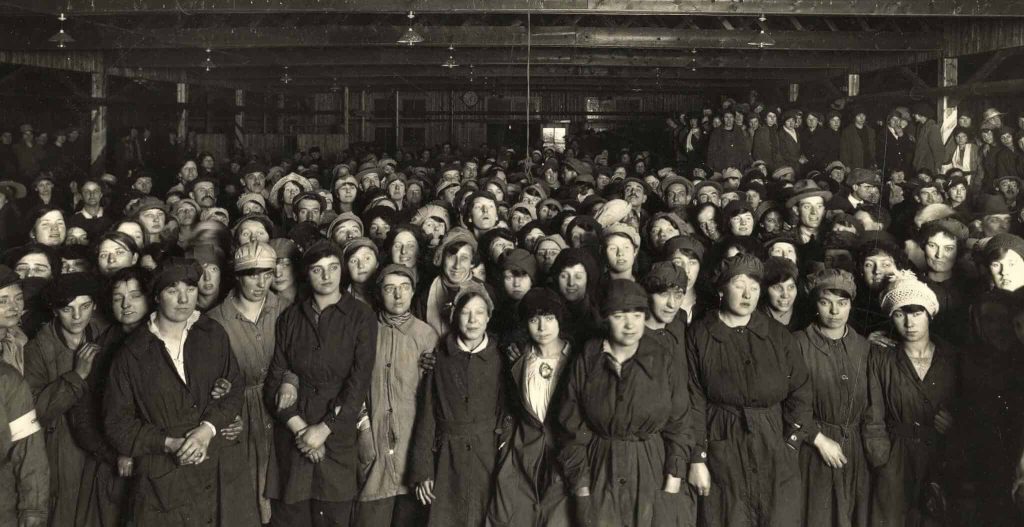
The workforce eventually reached around 16,000 people, and the nearby railway infrastructure had to be expanded to cope. Platforms at Crossgates Station were lengthened by roughly 800 feet so that trains carrying workers could be handled efficiently.
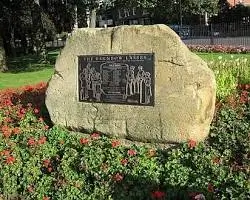
Around 93 percent of the workforce were women. These workers became known as the “Barnbow Lasses.” Many had come from domestic service, drawn by wages that could be two or three times higher than what they had previously earned.

But the work came at a cost. Handling TNT often stained skin and hair a yellow colour, earning the workers the nickname “Canaries.” To counteract the effects of the chemicals, the factory kept around 120 cows, producing roughly 300 gallons of milk each day for the workforce.
The Anatomy of a Disaster: Hut 42
Barnbow’s design reflected the constant danger of working with explosives. Instead of a single large production hall, work was divided into smaller buildings known as “huts.” These structures were separated by high earth banks designed to contain any accidental explosion.
Despite these precautions, disaster struck on the night of 5 December 1916.
At 10:27 pm, a 4.5-inch shell detonated at a capping machine inside Room 42 of Hut 42. The explosion triggered a devastating chain reaction.
Twenty-six women were killed almost instantly.
Steam pipes ruptured in the blast, flooding the damaged hut with scalding vapour and darkness.
The Heroism of William Parkin
In the chaos that followed, most people fled the scene — instinctively trying to escape further explosions.
William Parkin did the opposite.
Parkin was a factory mechanic, familiar with the layout and machinery of the filling huts. Without any breathing apparatus or protective equipment, he entered the wreckage of Hut 42 again and again.
Witness accounts record that he went inside twelve separate times.
Working through the escaping steam and the constant danger of further detonations, Parkin located the injured and carried them out to safety.
By the time the rescue effort ended, he had personally saved twelve women and girls.
The Era of “Accidental Deaths”
Despite the scale of the tragedy, the public heard very little about it.
Under the Defence of the Realm Act (DORA), strict wartime censorship prevented newspapers from reporting the explosion in detail. Maintaining morale and protecting sensitive industrial information took priority.
As a result, families often saw death notices for their daughters listed simply as “died suddenly” or “killed by accident.”
William Parkin’s bravery received no official recognition from the state.
The Silver Watch: A Proletarian Medal
The women of Barnbow refused to let Parkin’s courage pass unnoticed.
Among the surviving workers, a collection was organised to buy him an inscribed silver pocket watch. It was a gesture of gratitude from the people whose lives he had helped save.
For many years, this watch remained the only tangible recognition of Parkin’s actions — an unofficial medal given by the community he had risked his life to protect.
Restoring the Legacy
The human cost of the Barnbow explosion extended far beyond the factory gates.
Many of the women killed were supporting families. Kate Bainbridge, one of the victims, was a mother of four whose husband was already dying of tuberculosis. Her death left her family facing immediate hardship.
For decades, stories like these remained largely forgotten.
Only in 2019 did Leeds formally recognise William Parkin’s bravery, naming William Parkin Bridge and William Parkin Way in his honour.
Go Deeper into the “War of Production”
William Parkin’s story forms a central part of my research into the Barnbow explosion and the lives of the women who worked there.
But his heroism is only one part of a much larger story.
To understand the world of the Barnbow Lasses — their daily lives, the chemical dangers they faced, and the immense pressure of wartime production — my novel A Penny a Shell explores the human story behind the factory records.
Moving beyond the official silence of 1916, the book brings together archival fragments, family histories, and the lived experience of the workers who formed one of Britain’s most dangerous wartime front lines.
[Click here to explore A Penny a Shell and the world of the Barnbow Lasses.]