

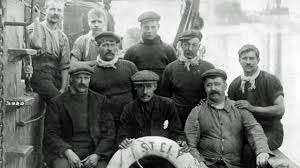
RNR Trawler Section WW1 – The First World War at sea is often told through fleets and decisive engagements. Battleships, admirals, and set-piece encounters dominate the record.
But much of the war was fought elsewhere.
Across the North Sea and along the British coastline, small vessels worked continuously — clearing mines, patrolling shipping routes, and keeping the sea usable. These ships were not purpose-built warships. Many had been fishing trawlers only months before.
They formed what became known as the Royal Navy Patrol Service.
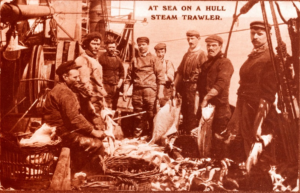
Key Facts About the Royal Navy Patrol Service
- Established at the outbreak of war in 1914
- Consisted largely of requisitioned trawlers and drifters
- Crewed by fishermen, Royal Naval Reserve men, and naval personnel
- Primary duties included:
- minesweeping
- anti-submarine patrols
- escort work
- Operated mainly in the North Sea and the English Channel
- Nicknamed “Harry Tate’s Navy”
- Suffered heavy casualties, with over 3,300 men lost
From Fishing Boats to Warships
When war began in August 1914, the Admiralty needed ships quickly. The answer lay in Britain’s fishing fleets.
Trawlers and drifters were taken into service and adapted for naval use. Guns were mounted. Sweeping gear fitted. Crews were reorganised under naval command. The changes were often practical rather than refined.
The men who crewed these vessels were already seafarers. Fishermen from ports like Scarborough, Grimsby, and Hull brought with them an understanding of the sea that no training could replace. Many stayed with their vessels, now working them under entirely different conditions.
The routines of fishing remained — the handling of gear, the reading of water — but the consequences had changed.
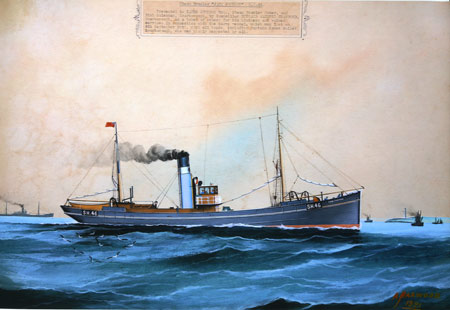
The Yorkshire Coast — Scarborough and the Trawler War
Along the Yorkshire coast, this work became immediate and visible.
Scarborough served as a significant base for trawler operations. Its steam trawlers were requisitioned early in the war and placed into the Admiralty’s Auxiliary Patrol, tasked with clearing mines and watching for submarines in the North Sea.
Each day, these vessels swept narrow channels through heavily mined waters, allowing merchant shipping to pass. The work was repetitive and precise, but always uncertain.
Among the men who served, it was simply the job. To others, the fleet became known as “Harry Tate’s Navy” — a reference to its improvised nature.
The name did not reflect the risk.
Mines — The Constant Threat
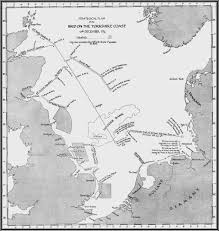
The primary danger faced by the Patrol Service came from mines.
These weapons lay hidden beneath the surface, anchored in place and waiting for contact. A single strike could destroy a vessel without warning.
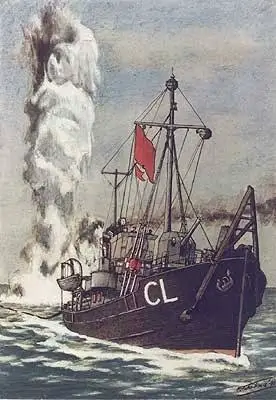
Minesweeping required two ships to tow a wire between them, designed to cut the mooring cables of these mines. Once released, the mine would rise and be destroyed by gunfire.
It was slow, methodical work.
And it was dangerous every time it was done.
Constant Losses at Sea
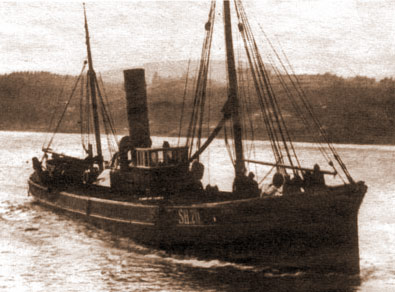
Losses began early and continued throughout the war.
Just days after the Scarborough bombardment of December 1914, the trawler HMT Garmo struck a mine and was lost, along with her skipper, Thaddeus Gilbert RNR, and much of her crew.
The danger did not lessen.
In September 1916, the German submarine U-57 attacked trawlers operating from the Yorkshire coast, sinking multiple vessels in a single afternoon. Similar incidents occurred throughout the war. Fishing vessels were intercepted, their crews removed, and the boats destroyed.
For those at sea, there was rarely warning and little protection.
Life Aboard a Patrol Vessel
Conditions on these vessels were harsh.
They were small ships, often exposed to the weather, operating in cold and heavy seas. Crews worked long hours with limited rest, sleeping where they could between watches.
What defined the experience was not constant action, but constant tension.
Most days passed in repetition: the same routes, the same tasks. Then, without warning, a mine or a submarine would break that routine.
It was a form of warfare that offered no clear enemy to confront, only the knowledge that danger was always present.
“Harry Tate’s Navy”
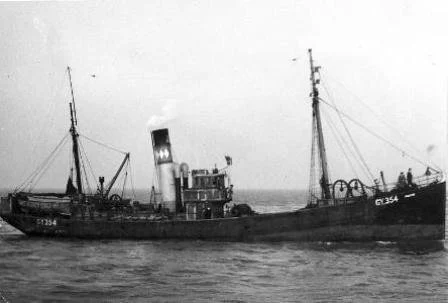
The nickname endured throughout the war.
To some, it reflected a fleet that appeared improvised — fishing vessels adapted for combat, equipment fitted where it could be, systems made to work rather than designed.
But the reality was more exacting.
These vessels performed work that larger ships could not. They operated in shallow waters, close to coastlines, and in areas where precision mattered more than firepower.
They kept channels open. They allowed supply lines to function. They made movement possible.
Between Risk and Survival
For those who remained at sea, the war brought a contradiction.
Fishing became more dangerous, but also more profitable. With supply reduced and demand increasing, prices rose. Some skippers earned more than they had before the war.
But the risk was constant.
Every trip carried the possibility of loss. Every return to harbour marked those who had not come back.
Why the Patrol Service Matters?
The Royal Navy Patrol Service did not win battles in the conventional sense.
Instead, it made the sea usable.
Without minesweeping and patrol work, shipping routes would have closed. Supplies would have slowed. The movement of men and material would have been far more difficult.
This was a war fought through repetition — through the same task carried out again and again under threat.
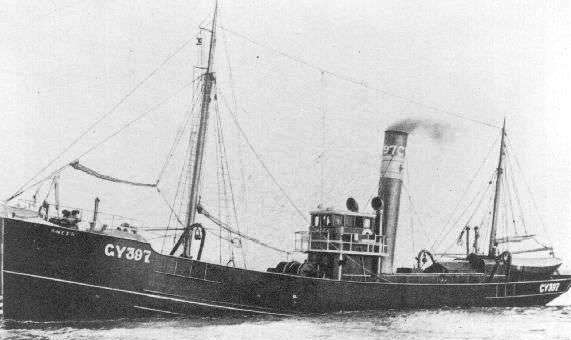
From History to Story — Rosie Morn
The work of the Patrol Service forms the foundation for my current writing, particularly in the story of Rosie Morn.
This is not a part of the war, often placed at the centre of the narrative. There are no large engagements here, no decisive moments that define the conflict. Instead, there is routine, pressure, and the knowledge that any ordinary task might end without warning.
The aim in writing has been to stay close to that reality — to reflect the men who served on these vessels and the conditions they faced, without turning the experience into spectacle.
Because for those who worked these ships, this was not background to the war.
It was the war.
Closing Thoughts
The First World War is often remembered through its largest moments.
But much of its reality lay elsewhere — in small vessels, in long patrols, and in work that had to be done whether or not it was seen.
The Royal Navy Patrol Service belongs to that part of the war.
Quiet. Repetitive. Dangerous.
Essential.

2 Responses
My father served on trawlers his name James Gunn Shearer he was ivalided out in 1943 and he died in 1956
Hi Donald,
Thanks for your comment.
Where was he based, where did he serve. My Granddad also served in Harry Tate’s Navy through the second world war, having served in the Royal Navy during the first. He was based on a Trawler in Hull. I hope I can honour the men and boys that served with this story. It is WW1, but I am sure the experiences were similar.
Antony